
25/11/2025

RocaSalvatella
When service surpasses the product, a new source of growth for the industry is born.
In a context of saturated markets, pressure on margins and clients demanding more value, industrial companies face a common challenge: how to grow beyond the product. The answer lies in Servitisation — a strategic evolution that transforms the one-off sale of products into recurring relationships based on smart services and the use of data. It is estimated that, by 2035, 60% of industrial revenues will come from services linked to products.
Therefore, we are facing a paradigm shift in business models, driven by Servitisation and smart data management, where leading companies have already stopped focusing on the sale of isolated products to offer results, experiences and long-lasting relationships. This shift means moving from selling things to providing constant value and sustained impact.
What is Servitisation?
Servitisation is the transformation of the business model that pivots from one-off product sales towards the generation of recurring and predictable revenue through smart services. The focus is no longer on the what (the product), but on the what for (the value or result offered). It is not about selling equipment, but about guaranteeing performance, efficiency or availability.
The transition towards Servitisation is based on a constant evolution of value: Product → Service → Platform → Ecosystem
This evolution represents a progressive value shift: from the sale of a product to the incorporation of a service, the creation of a value ecosystem and, finally, the consolidation of a platform. In this new scenario, data becomes the key strategic asset.
What is Servitisation for?
Servitisation is a lever for development and growth for organisations. The main opportunities it offers are:
Recurring and predictable revenue, providing financial stability.
More loyal customers, because value is maintained over time.
Real differentiation, competing on results and not on price.
New business opportunities, thanks to data and connectivity.
From scattered data to recurring revenue
To transform isolated data into business models based on digital services, three phases must be followed:
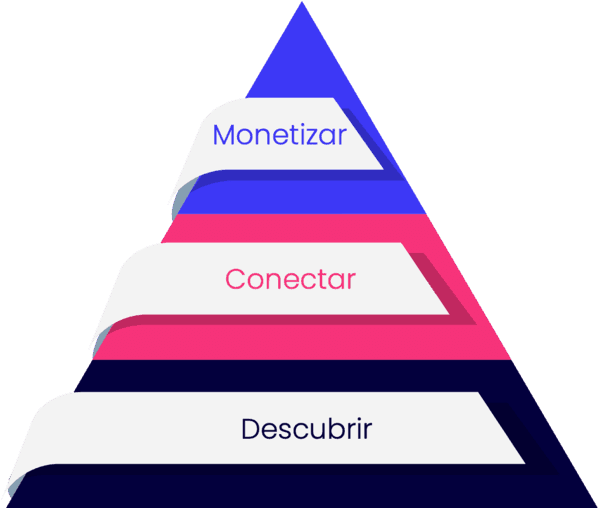

Monetise (Services → Revenue): deploy and scale services that provide value and recurring revenue.

Connect (Insights → Services): structure information to design digital services.

Discover (Data → Insights): identify what data exists and what value it can generate.
Key points to prepare for Servitisation
Before launching new services, it is necessary to understand if the organisation is ready to make this leap. Based on our experience with industrial companies, we have identified six key areas that determine the success of the process:
Vision and strategy
How does Servitisation fit with business objectives? What services can generate recurring revenue and reinforce the value proposition?Customer and asset insight
Do we have real data on how products are used, what customers value and where friction exists?Operating and commercial model
Can the organisation operate and sell recurring services? Are sales, maintenance and support processes ready for "as a Service" contracts?Digital infrastructure and data
Do we have a technological architecture capable of capturing, integrating and activating product and usage data?Culture and service mindset
Are teams aligned with a vision focused on the customer, recurrence and long-term value?Partnerships and ecosystem
How can we collaborate with other players (partners, customers, suppliers) to build services of greater joint value?
A strategic evolution
Today, the maturity of digital technologies, the reduction in connectivity and sensor technology costs, and the availability of cloud, artificial intelligence and edge computing platforms make it possible to scale servitised models efficiently.
The ecosystem is ready: technological enablers are accessible and digital capabilities are more widespread.

Servitisation is not a trend, it is a natural evolution for companies that want to grow by delivering continuous value. The data, connectivity and technology are already there. The next step is to transform the relationship with the customer.